Navigating the Salesforce CRM cost landscape can feel like decoding a secret language. From startups to Fortune 500s, everyone wants to know: what’s the real price tag? Let’s break it down—clearly, honestly, and without the fluff.
Salesforce CRM Cost: The Big Picture in 2024

Understanding the total Salesforce CRM cost isn’t just about monthly subscription fees. It’s a complex ecosystem of licensing, implementation, customization, training, and ongoing support. In 2024, Salesforce remains the world’s #1 CRM platform, powering over 150,000 companies globally. But with great power comes a significant price. The average mid-sized business spends between $5,000 and $20,000 annually just on licenses, not including add-ons or third-party integrations.


Why Salesforce Dominates the CRM Market
Salesforce isn’t just a CRM; it’s a full-scale customer relationship ecosystem. Its dominance stems from unmatched scalability, cloud-native architecture, and a vast AppExchange marketplace with over 5,000 apps. According to Gartner’s 2023 Magic Quadrant for CRM, Salesforce leads in both vision and execution, outpacing competitors like HubSpot and Microsoft Dynamics.
- Market share leader with over 19% of the global CRM market
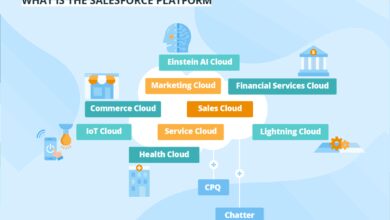
- Available in multiple clouds: Sales, Service, Marketing, Commerce, and more
- AI-powered tools like Einstein Analytics embedded across platforms
Hidden Costs Beyond the Subscription
The sticker price of Salesforce CRM cost often misleads businesses. While Salesforce advertises entry-level plans starting at $25/user/month, the real expense emerges from:
- Implementation services (often $10,000–$100,000+)
- Custom development and automation workflows
- Third-party integration fees (e.g., ERP, email, analytics)
- Ongoing admin and user training
“The true cost of Salesforce is rarely in the license—it’s in the ecosystem you build around it.” — CRM Implementation Consultant, 12+ years experience
Breaking Down Salesforce CRM Cost by Edition
Salesforce offers several editions tailored to different business needs. Each comes with a distinct Salesforce CRM cost structure. Choosing the right one is critical to avoiding overspending or underutilizing features.
Essentials Edition: Entry-Level for Small Teams
Priced at $25/user/month, Essentials is designed for small businesses with basic CRM needs. It includes core sales automation, contact management, and email integration.
- Limited customization options
- No API access
- Ideal for teams under 10 users
However, the Salesforce CRM cost for Essentials can quickly escalate if you need more than basic functionality. Many small businesses find themselves upgrading within 6–12 months.
Professional Edition: The Mid-Tier Workhorse
At $75/user/month, Professional Edition unlocks workflow automation, role-based access, and basic reporting. It’s the most popular choice for growing SMBs.
- Supports up to 10 custom apps
- Includes API access for integrations
- Advanced dashboards and analytics
Despite its popularity, the Salesforce CRM cost here often surprises users. Add-ons like Salesforce CPQ or Pardot can double the monthly bill. For example, adding Pardot Marketing Automation starts at $1,250/month, regardless of user count.
Enterprise & Unlimited Editions: For Scaling Businesses
Enterprise ($150/user/month) and Unlimited ($300/user/month) editions offer full customization, sandbox environments, and 24/7 support. These are tailored for large organizations with complex processes.
- Unlimited custom apps and objects
- Dedicated account teams and SLAs
- Advanced security and compliance features
The Salesforce CRM cost for Enterprise can exceed $100,000/year for a 100-user company. Unlimited is often overkill unless you have dedicated admin teams and need round-the-clock support.
Salesforce CRM Cost Add-Ons That Skyrocket Your Bill
One of the biggest misconceptions about Salesforce CRM cost is that the base license covers everything. In reality, most businesses need additional clouds and tools to function effectively.
Sales Cloud vs. Service Cloud: What’s the Real Difference?
Sales Cloud is included in most editions and focuses on lead-to-cash processes. Service Cloud, priced at $75–$150/user/month, adds case management, knowledge bases, and omnichannel support.
- Sales Cloud: $25–$300/user/month (depending on edition)
- Service Cloud: Additional $75–$150/user/month
- Many companies pay for both, doubling their Salesforce CRM cost
According to Salesforce’s State of Service Report 2023, 68% of high-performing service teams use Service Cloud, justifying the added expense for customer-centric businesses.
Pardot and Marketing Cloud: The Hidden Giants
Pardot, Salesforce’s B2B marketing automation tool, starts at $1,250/month for up to 10,000 contacts. Marketing Cloud, for enterprise-level campaigns, can cost $4,000–$10,000/month or more.
- Pardot is not priced per user—making it expensive for small teams
- Marketing Cloud requires professional services for setup
- Both integrate seamlessly but add significant Salesforce CRM cost
“We thought Pardot would save us money on email campaigns. Instead, it became our second-largest software expense.” — CMO, Mid-Sized Tech Firm
CPQ and Billing: Revenue Operations Power Tools
Salesforce CPQ (Configure, Price, Quote) starts at $75/user/month and is essential for complex pricing models. Salesforce Billing, for subscription management, adds another $50–$100/user/month.
- Reduces quote errors by up to 70% (per Forrester ROI Study)
- Integrates with ERP systems like NetSuite and SAP
- Often requires third-party consultants for implementation
For SaaS companies, these tools are worth the Salesforce CRM cost. For others, they may be overkill.
Implementation Costs: The Silent Budget Killer
Even with the right edition, poor implementation can derail ROI. Salesforce CRM cost isn’t just software—it’s services, time, and expertise.
DIY vs. Partner-Led Implementation
Some businesses attempt DIY setups using Trailhead (Salesforce’s free learning platform). While possible, it often leads to technical debt.
- DIY: $0–$5,000 (mostly internal labor)
- Partner-led: $15,000–$100,000+ depending on complexity
- Top partners include Accenture, Deloitte, and smaller boutique firms
A Nucleus Research study found that companies using certified partners achieve 2.3x faster ROI than those going solo.
Customization and Integration Expenses
Every business has unique workflows. Customizing Salesforce to match them requires development hours.
- Average customization cost: $75–$150/hour
- Common integrations: Slack, Zoom, Shopify, QuickBooks
- Middleware tools like MuleSoft (owned by Salesforce) cost $50,000+/year
MuleSoft, while powerful, is a major contributor to Salesforce CRM cost. Many companies opt for cheaper alternatives like Zapier or Workato.
Training and Change Management
User adoption is the #1 predictor of CRM success. Yet, 43% of companies underinvest in training.
- Formal training programs: $1,000–$5,000
- Ongoing coaching and admin support
- Internal champions can reduce resistance
“We spent $80,000 on Salesforce but only $2,000 on training. Adoption was below 30%. It was a disaster.” — Sales Director, Manufacturing Company
Hidden Ongoing Costs You Can’t Ignore
After go-live, the Salesforce CRM cost doesn’t stop. Ongoing expenses can exceed initial setup costs over time.
Admin and Maintenance Burden
Salesforce requires regular updates, user management, and performance tuning.
- Part-time admin: $50–$100/hour
- Full-time admin salary: $70,000–$100,000/year
- Monthly health checks and optimization
Without proper maintenance, data quality degrades, automation breaks, and user frustration grows.
Upgrade and Renewal Surprises
Salesforce typically increases prices by 5–10% annually. Contract renewals often include pressure to upgrade editions or add new clouds.
- Negotiation is possible—but requires preparation
- Multi-year contracts can lock in rates
- Always audit usage before renewal
Many companies are caught off guard when their Salesforce CRM cost jumps 20%+ at renewal due to user count growth or forced upgrades.
Data Storage and API Limits
Salesforce imposes data storage and API call limits. Exceeding them triggers overage fees.
- Additional storage: $0.25/MB/month
- API calls: $100/1,000 calls/month (for Enterprise)
- Large data imports or integrations can rack up charges
One healthcare client incurred $12,000 in API overages in a single month due to a misconfigured integration. Monitoring usage is critical.
Alternatives to Reduce Salesforce CRM Cost
While Salesforce is powerful, it’s not the only option. Some businesses achieve similar results at a fraction of the cost.
HubSpot CRM: The Budget-Friendly Challenger
HubSpot offers a free CRM with robust features. Paid plans start at $45/month for Sales Hub.
- Free tier includes contact management, email tracking, and pipelines
- Intuitive UI reduces training time
- Limited customization compared to Salesforce
For small to mid-sized businesses, HubSpot can slash Salesforce CRM cost by 50–70%. However, it lacks the scalability for enterprise needs.
Microsoft Dynamics 365: The Enterprise Alternative
Dynamics 365 starts at $65/user/month and integrates seamlessly with Microsoft 365.
- Ideal for companies already using Office 365
- Lower learning curve for Microsoft users
- Strong ERP integration with Dynamics AX/BC
While less flexible than Salesforce, Dynamics 365 offers a more predictable Salesforce CRM cost structure with fewer surprise add-ons.
Open-Source and Niche CRMs
Platforms like SuiteCRM or Zoho CRM offer cost-effective solutions for specific industries.
- Zoho CRM: $14–$52/user/month
- SuiteCRM: Free (self-hosted), but requires IT support
- Best for businesses with tight budgets and simple workflows
These may not match Salesforce’s AI or ecosystem, but they can meet basic needs at a fraction of the Salesforce CRM cost.
How to Calculate Your True Salesforce CRM Cost
To avoid budget overruns, build a comprehensive cost model that includes all direct and indirect expenses.
The 5-Year Total Cost of Ownership (TCO) Model
Estimate expenses over a 5-year horizon:
- Licensing (users × edition × 60 months)
- Implementation (one-time)
- Customization and integrations
- Training and change management
- Ongoing admin, support, and upgrades
Example: A 50-user company on Professional Edition ($75/user/month) with $25,000 implementation, $15,000 customization, $10,000 training, and $60,000 in admin costs over 5 years.
Total TCO = (50 × $75 × 60) + $25,000 + $15,000 + $10,000 + $60,000 = $340,000.
Negotiation Tips to Lower Your Salesforce CRM Cost
Salesforce is notoriously difficult to negotiate with, but it’s not impossible.
- Bundle multiple clouds for discounts
- Commit to 2–3 year contracts for better rates
- Ask for free training or credits
- Use competitive quotes from HubSpot or Dynamics as leverage
One client reduced their 3-year contract by 18% by threatening to switch to Microsoft Dynamics.
When to Walk Away from Salesforce
Salesforce isn’t for everyone. Consider alternatives if:
- Your team has fewer than 10 users
- You need only basic contact and pipeline management
- Your budget is under $10,000/year
- You lack internal IT or admin resources
In these cases, the Salesforce CRM cost outweighs the benefits. Simpler tools deliver better ROI.
Salesforce CRM Cost: Real-World Case Studies
Let’s look at how real companies experience Salesforce CRM cost.
Case Study 1: SaaS Startup Scaling Rapidly
A 30-person SaaS company adopted Salesforce Professional Edition ($75/user/month) with Pardot ($1,250/month) and CPQ ($75/user/month).
- Initial implementation: $40,000
- Annual licensing: (30 × $75 × 12) + (30 × $75 × 12) + $1,250 × 12 = $64,500
- Customization: $20,000
- Admin: $80,000/year (full-time)
Total Year 1 cost: ~$205,000. Justified by 35% increase in sales efficiency and 20% faster onboarding.
Case Study 2: Nonprofit Struggling with Overbuying
A nonprofit with 15 staff chose Unlimited Edition ($300/user/month) thinking they needed top-tier support.
- Annual licensing: 15 × $300 × 12 = $54,000
- Implementation: $35,000
- Used less than 40% of features
After audit, they downgraded to Professional Edition, saving $30,000/year. The Salesforce CRM cost was simply too high for their needs.
Case Study 3: Enterprise with Global Operations
A multinational with 500 users uses Enterprise Edition, Service Cloud, Marketing Cloud, and MuleSoft.
- Licensing: ~$1.2 million/year
- Implementation: $500,000 (multi-phase)
- Ongoing partner support: $200,000/year
Despite high Salesforce CRM cost, the platform unified global sales, service, and marketing, reducing operational silos and improving customer satisfaction by 40%.
What is the starting price for Salesforce CRM?
Salesforce CRM starts at $25/user/month for the Essentials edition. However, most businesses require Professional or Enterprise editions, which start at $75 and $150/user/month, respectively. Additional costs for implementation, customization, and add-ons like Pardot or Service Cloud can significantly increase the total expense.
Is Salesforce worth the cost?
For mid-sized to large businesses with complex sales, service, or marketing needs, Salesforce is often worth the investment. Its scalability, AI capabilities, and ecosystem deliver measurable ROI. However, for small teams with simple workflows, the Salesforce CRM cost may outweigh the benefits.
How can I reduce my Salesforce CRM cost?
You can reduce Salesforce CRM cost by choosing the right edition, negotiating multi-year contracts, using third-party integration tools instead of MuleSoft, and investing in user training to maximize adoption. Regularly audit your usage and downgrade unused features or editions.
Does Salesforce charge for data storage?
Yes, Salesforce includes limited data storage in each edition. Exceeding these limits incurs overage fees—typically $0.25 per MB per month. Large organizations with extensive data should monitor usage closely to avoid unexpected charges.
Can I switch Salesforce editions later?
Yes, you can upgrade or downgrade Salesforce editions, but downgrading may result in data or feature loss. Upgrades are seamless but increase licensing costs. Always consult with your Salesforce rep or partner before making changes.
Understanding the full scope of Salesforce CRM cost is essential for making a smart investment. It’s not just about the monthly subscription—it’s about implementation, customization, training, and long-term maintenance. While Salesforce offers unmatched power and scalability, its price tag demands careful planning. By evaluating your real needs, comparing alternatives, and building a 5-year TCO model, you can avoid budget overruns and maximize ROI. Whether you’re a startup or an enterprise, the key is alignment: match the platform’s capabilities to your business goals, not just its brand reputation.
Further Reading: