Thinking about investing in a CRM system but overwhelmed by the pricing models? You’re not alone. CRM system pricing can be confusing, with hidden fees, complex tiers, and endless add-ons. Let’s break it down—clearly, honestly, and without the sales jargon.
Understanding CRM System Pricing: The Basics

Customer Relationship Management (CRM) systems are essential tools for businesses aiming to streamline sales, marketing, and customer service. But before diving into features or integrations, understanding CRM system pricing is crucial. It’s not just about the monthly fee per user; it’s about total cost of ownership, scalability, and long-term value.

What Is CRM System Pricing?
CRM system pricing refers to the cost structure associated with using a CRM platform. This includes subscription fees, setup costs, customization, training, integration, and ongoing support. While many vendors advertise low entry-level prices, the actual cost can skyrocket as your business grows or requires advanced functionality.
According to Gartner, the global CRM software market exceeded $65 billion in 2023, driven by increasing demand for cloud-based solutions. With so many options, understanding how vendors price their systems is key to making a smart investment.
Why CRM Pricing Matters for Your Business
Choosing the wrong CRM based on price alone can lead to poor adoption, inefficient workflows, and wasted resources. A system that’s too basic may not meet your needs, while an overly complex one can burden your team and budget. The right CRM system pricing model should align with your business size, goals, and growth trajectory.
- Small businesses need affordability and ease of use.
- Mid-sized companies require scalability and integration.
- Enterprises demand customization, security, and advanced analytics.
Ignoring these factors can result in a 30–50% higher total cost over three years, according to a Forrester study.
Common CRM Pricing Models Explained
Vendors use several pricing models, each with pros and cons:
- Per-User, Per-Month: Most common. You pay a fixed rate for each user monthly (e.g., $12/user/month).
- Tiered Pricing: Features are grouped into packages (e.g., Basic, Pro, Enterprise), with higher tiers costing more.
- Flat-Rate Pricing: A single price for unlimited users (rare, usually for small teams).
- Usage-Based Pricing: Costs scale with activity (e.g., number of contacts, emails sent).
- One-Time License Fee: Common with on-premise CRM systems (e.g., Microsoft Dynamics).
For example, Zoho CRM offers a free plan for up to 3 users and tiered pricing starting at $14/user/month, while Salesforce starts at $25/user/month but can exceed $300/user/month for enterprise plans.
Factors That Influence CRM System Pricing
CRM system pricing isn’t arbitrary. Multiple factors determine how much you’ll pay. Understanding these helps you anticipate costs and avoid surprises.
Number of Users and Team Size
This is the most obvious factor. Most cloud-based CRMs charge per user, per month. The more team members who need access, the higher the cost. However, some vendors offer volume discounts for larger teams.
For instance, HubSpot CRM offers a free tier with limited users, but its Sales Hub starts at $45/month for two users. As you add more seats, the cost scales linearly. A team of 50 could pay over $2,000/month just for basic access.
It’s important to distinguish between licensed users and actual users. Some companies pay for licenses but underutilize them, leading to wasted spending. Regular audits can help optimize user allocation.
CRM system pricing – CRM system pricing menjadi aspek penting yang dibahas di sini.
Feature Tiers and Functional Depth
CRMs are rarely one-size-fits-all. Vendors segment features into tiers, and pricing increases with functionality. Basic plans may include contact management and lead tracking, while premium plans offer automation, AI insights, forecasting, and advanced reporting.
For example:
- Starter Plan: Contact & deal management, basic reporting ($10–$20/user/month).
- Professional Plan: Workflow automation, email integration, custom fields ($30–$50/user/month).
- Enterprise Plan: API access, role-based permissions, SLA support ($75+/user/month).
As noted by Capterra, 68% of businesses upgrade within 18 months due to outgrowing their initial plan—often doubling their CRM system pricing.
Integration and Customization Needs
Most businesses don’t operate in isolation. Your CRM must integrate with email, marketing tools, ERP systems, and customer support platforms. While basic integrations (e.g., Gmail, Outlook) are often free, advanced ones (e.g., SAP, Shopify, custom APIs) may require additional fees or developer work.
Customization—such as building custom dashboards, workflows, or fields—also impacts cost. Some platforms like Salesforce charge extra for sandbox environments or development support. Third-party consultants can charge $100–$200/hour for setup, adding thousands to your initial investment.
“The true cost of a CRM isn’t the sticker price—it’s the sum of integration, training, and maintenance over time.” — TechCrunch, 2023
Hidden Costs in CRM System Pricing
Many companies underestimate CRM costs because they focus only on the advertised subscription fee. But hidden costs can add 20–50% to your annual budget.
Implementation and Onboarding Fees
Getting your CRM up and running isn’t always plug-and-play. Larger vendors like Salesforce or Microsoft Dynamics often charge implementation fees ranging from $5,000 to $50,000+, depending on complexity.
These fees cover data migration, user training, workflow configuration, and system testing. Even mid-tier platforms may charge $1,000–$5,000 for professional onboarding. Some offer self-service setup, but this requires internal IT resources, which also have a cost.
According to Nucleus Research, companies that invest in proper onboarding see 3x faster ROI than those that don’t.
Training and Adoption Support
A CRM is only as good as its adoption rate. If your team doesn’t use it, you’re wasting money. Training is essential but often overlooked in CRM system pricing.
Vendors may offer free webinars or documentation, but hands-on training—especially for complex systems—requires time and effort. Internal champions or external consultants may be needed. Some platforms, like HubSpot, include free certification courses, while others charge for advanced training modules.
Poor adoption can cost businesses up to $10,000 per user annually in lost productivity, per a McKinsey report.
CRM system pricing – CRM system pricing menjadi aspek penting yang dibahas di sini.
Data Migration and Storage Overages
Moving data from spreadsheets or legacy systems into your new CRM isn’t trivial. Data cleansing, deduplication, and mapping fields take time. Some vendors charge based on the volume of data migrated.
Additionally, storage limits can trigger overage fees. While most CRMs offer generous free storage, enterprises with millions of contacts or large file attachments may exceed limits. For example, Salesforce charges extra for data storage beyond the included allowance in certain editions.
One manufacturing client reported a $12,000 surprise bill after migrating 10 years of customer data without proper planning.
Top CRM Platforms and Their Pricing Breakdown
To make informed decisions, let’s compare some of the most popular CRM platforms and their CRM system pricing structures.
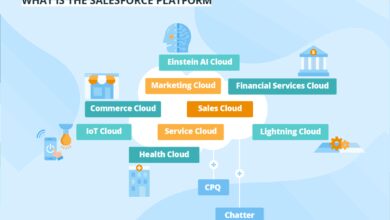
Salesforce: The Enterprise Leader
Salesforce dominates the CRM market with a 19.8% share (IDC, 2023). Its pricing is complex but highly scalable.
- Salesforce Essentials: $25/user/month – Basic CRM for small teams.
- Sales Cloud Professional: $75/user/month – Automation, forecasting, integrations.
- Sales Cloud Enterprise: $150/user/month – Customization, API access, advanced security.
- Unlimited & Custom: $300+/user/month – 24/7 support, sandboxes, premium features.
Additional costs: Pardot (marketing automation) starts at $1,250/month, and Einstein AI adds $50–$100/user/month. Implementation can cost $20,000+.
Learn more at Salesforce Pricing.
HubSpot CRM: Best for Startups and SMBs
HubSpot offers a freemium model that’s attractive to small businesses. The free CRM includes contact management, email tracking, and basic reporting.
- Free Plan: $0 – Unlimited users, core CRM features.
- Starter: $45/month – Email marketing, live chat, forms.
- Professional: $450/month (for 5 users) – Automation, reporting, workflows.
- Enterprise: $1,200/month (for 5 users) – Advanced analytics, custom objects, SLA.
HubSpot’s pricing is user-based but scales quickly. A team of 20 on the Professional plan could pay over $2,000/month. However, its seamless integration with marketing tools adds value.
Explore plans at HubSpot CRM Pricing.
Microsoft Dynamics 365: Integrated with Office 365
Microsoft Dynamics 365 is ideal for organizations already using Microsoft 365. It integrates deeply with Outlook, Teams, and Excel.
- Sales Professional: $65/user/month – Lead & opportunity management.
- Customer Service: $95/user/month – Case management, knowledge base.
- Enterprise Edition: Custom pricing – Full customization, AI, analytics.
Dynamics 365 also offers a “Team Members” license for $38/user/month for read-only access. However, full implementation often requires third-party partners, adding significant cost.
CRM system pricing – CRM system pricing menjadi aspek penting yang dibahas di sini.
Visit Microsoft Dynamics Pricing for details.
How to Choose the Right CRM Based on Pricing
Choosing a CRM isn’t just about finding the cheapest option—it’s about maximizing value. Here’s how to evaluate CRM system pricing wisely.
Assess Your Business Needs First
Start by defining your goals. Are you looking to improve sales tracking? Automate marketing? Enhance customer support? List your must-have features and nice-to-haves.
For example, a real estate agency might prioritize lead capture and follow-up automation, while a SaaS company may need contract management and renewal tracking.
Use a CRM requirements checklist to avoid overpaying for unused features. Tools like G2 or Capterra let you filter CRMs by feature and price.
Calculate Total Cost of Ownership (TCO)
Don’t just look at the monthly subscription. Calculate the total cost of ownership over 3–5 years. Include:
- Subscription fees (per user, per month)
- Implementation and setup
- Training and support
- Integration costs
- Data migration
- Customization and development
- Renewal increases (vendors often raise prices annually)
For example, a 10-person team on a $50/user/month plan pays $6,000/year. Add $5,000 for setup and $2,000 for training, and your first-year cost is $13,000—not $6,000.
“The cheapest CRM today can become the most expensive tomorrow if it doesn’t scale.” — Forbes, 2022
Look for Scalability and Flexibility
Your CRM should grow with your business. Choose a platform that allows you to upgrade features, add users, and integrate new tools without switching systems.
Ask vendors:
- Can I upgrade/downgrade plans easily?
- Are there penalties for canceling?
- How much does the next tier cost?
- Is there a long-term contract?
Platforms like Zoho and Freshsales offer flexible plans with no long-term lock-ins, making them ideal for growing businesses.
Free vs. Paid CRM: Is Free Really Better?
Many CRMs offer free versions, but are they worth it? Let’s weigh the pros and cons.
Advantages of Free CRM Systems
Free CRMs are excellent for startups, solopreneurs, or small teams testing the waters. Benefits include:
CRM system pricing – CRM system pricing menjadi aspek penting yang dibahas di sini.
- No financial risk
- Quick setup and onboarding
- Access to core CRM features (contact management, deal tracking)
- Unlimited users (in some cases, like HubSpot)
For example, HubSpot’s free CRM is used by over 150,000 companies worldwide. It includes email tracking, meeting scheduling, and basic reporting—enough for many small sales teams.
Limitations of Free CRM Platforms
Free doesn’t mean feature-complete. Common limitations include:
- No automation or workflows
- Limited integrations
- No phone support
- Basic reporting only
- Brand visibility (e.g., “Powered by HubSpot” in emails)
As your business grows, you’ll likely need to upgrade. And when you do, the jump in price can be steep. HubSpot’s Professional plan is over 10x more expensive than its free tier.
Additionally, free CRMs may lack security features, audit logs, or compliance certifications needed for regulated industries.
When to Upgrade from Free to Paid
Consider upgrading when you:
- Need automation (e.g., follow-up emails, task assignments)
- Have more than 5 active users
- Require integration with marketing or support tools
- Need advanced reporting or forecasting
- Experience lead volume growth
One e-commerce business delayed upgrading for 18 months, costing them an estimated 200 lost sales due to manual follow-ups.
Future Trends in CRM System Pricing
The CRM landscape is evolving. New technologies and business models are reshaping CRM system pricing.
Rise of AI-Powered CRM Features
Artificial intelligence is no longer a luxury—it’s becoming standard. AI-driven features like predictive lead scoring, chatbots, and sentiment analysis are now common in mid-to-high-tier plans.
However, AI often comes at a premium. Salesforce’s Einstein AI adds $50/user/month. Microsoft’s Dynamics 365 AI modules are sold separately.
By 2025, Gartner predicts that 70% of new CRM implementations will include AI capabilities, up from 30% in 2022. This will push average CRM system pricing upward unless vendors bundle AI into base plans.
Subscription Fatigue and Demand for Simpler Pricing
Businesses are tired of complex, tiered pricing. There’s growing demand for transparent, flat-rate models. Some vendors are responding:
- Freshsales: Offers flat pricing per tier, regardless of user count (up to a limit).
- Pipedrive: Simplified plans with clear feature sets.
- Zoho CRM: Lifetime deals for small businesses in select regions.
A 2023 Salesforce report found that 64% of buyers prefer simple, predictable pricing over feature-rich but complex models.
CRM system pricing – CRM system pricing menjadi aspek penting yang dibahas di sini.
Increased Focus on Value-Based Pricing
Instead of charging per user, some vendors are experimenting with value-based pricing—charging based on ROI, revenue generated, or number of deals closed.
For example, a CRM might charge 1% of closed sales instead of a flat monthly fee. This aligns vendor success with customer success but is still rare.
As CRM becomes more outcome-driven, we may see more performance-based pricing models emerge, especially in SaaS and e-commerce sectors.
What is the average cost of a CRM system?
The average cost of a CRM system ranges from $12 to $250 per user per month. Small businesses can start with free or $10–$20 plans, while enterprises often pay $100+ per user for advanced features. Implementation and hidden costs can add thousands to the total.
Which CRM has the best pricing for small businesses?
HubSpot CRM and Zoho CRM are widely regarded as the best for small businesses due to their free plans and affordable entry-level tiers. HubSpot offers unlimited users on its free plan, while Zoho provides robust features at $14/user/month.
Are there any truly free CRM systems?
Yes, several CRMs offer truly free plans with no time limits. HubSpot CRM, Zoho CRM, and Insightly provide free versions with core features. However, they often limit advanced functionality, automation, and support.
How can I reduce CRM system pricing costs?
You can reduce costs by starting with a free plan, limiting user access to essential staff, negotiating annual contracts, avoiding unnecessary add-ons, and conducting regular usage audits. Also, consider open-source CRMs like SuiteCRM for full control and lower licensing fees.
Does CRM pricing include training and support?
CRM system pricing – CRM system pricing menjadi aspek penting yang dibahas di sini.
Basic support is often included in subscription fees, but advanced training, onboarding, and 24/7 support are typically reserved for higher-tier plans or charged separately. Always confirm what’s included before signing.
CRM system pricing is more than just a number—it’s a strategic decision that impacts your sales efficiency, customer experience, and bottom line. From understanding pricing models to avoiding hidden fees, the key is to look beyond the sticker price. Evaluate your needs, calculate total costs, and choose a platform that scales with your growth. Whether you’re a startup using a free CRM or an enterprise investing in Salesforce, the right choice today can save you thousands tomorrow. Stay informed, ask the right questions, and make your CRM work for you—not against your budget.
Further Reading: