Thinking about implementing a CRM system but unsure where to start? This comprehensive CRM Implementation Guide walks you through every critical phase—strategy, selection, data migration, training, and more—so you can boost customer relationships and drive real business growth.
CRM Implementation Guide: Understanding the Basics

Before diving into the technicalities, it’s essential to grasp what CRM implementation truly means. At its core, CRM (Customer Relationship Management) implementation is the process of integrating a CRM system into your business operations to manage customer interactions, streamline processes, and improve profitability. This CRM Implementation Guide will demystify the entire journey, from planning to post-launch optimization.


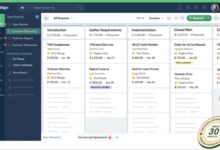



What Is CRM and Why It Matters
CRM stands for Customer Relationship Management—a technology used to manage all your company’s interactions with current and potential customers. A well-implemented CRM system helps businesses stay connected to customers, streamline processes, and improve profitability. According to Salesforce, high-performing sales teams are 1.5x more likely to use CRM data to drive decisions.
- Centralizes customer data across departments
- Enhances customer service and support
- Improves sales forecasting and tracking
CRM isn’t just for large enterprises. Small and mid-sized businesses benefit significantly by automating routine tasks, gaining insights from customer behavior, and personalizing communication.
Common Misconceptions About CRM
Many organizations approach CRM with outdated assumptions. One common myth is that CRM is only a sales tool. In reality, CRM impacts marketing, customer service, finance, and even HR. Another misconception is that CRM implementation is a one-time IT project. The truth? It’s an ongoing business transformation.
“CRM is not just software—it’s a strategy for building better relationships.” — Paul Greenberg, CRM Industry Analyst
Ignoring these misconceptions can lead to poor adoption, wasted investment, and missed opportunities. This CRM Implementation Guide will help you avoid these pitfalls from day one.
Step 1: Define Clear Objectives and Strategy
Any successful CRM Implementation Guide begins with a solid strategy. Without clear goals, even the most advanced CRM system will underperform. This phase is about aligning your CRM initiative with your overall business objectives.
Identify Business Goals
Ask yourself: What do you want to achieve with your CRM? Common objectives include:
CRM Implementation Guide – CRM Implementation Guide menjadi aspek penting yang dibahas di sini.
- Increasing sales conversion rates
- Reducing customer response time
- Improving customer retention
- Enhancing cross-departmental collaboration
For example, a B2B software company might aim to reduce lead response time from 48 hours to under 1 hour. A retail brand may focus on personalizing email campaigns using customer purchase history. These specific goals will shape your CRM requirements.
Map Key Processes
Before selecting a CRM, map out your current customer-facing processes. This includes lead management, sales pipelines, customer onboarding, support workflows, and marketing automation. Identifying inefficiencies now helps you choose a CRM that solves real problems.
Use process mapping tools like Lucidchart or Miro to visualize workflows. Engage stakeholders from sales, marketing, and support to ensure accuracy. This collaborative approach ensures the CRM supports—not disrupts—daily operations.
“You can’t improve what you don’t measure. Start by documenting your current state.”
Step 2: Choose the Right CRM Platform
With over 200 CRM vendors in the market, selecting the right one can be overwhelming. This section of the CRM Implementation Guide breaks down the evaluation process into manageable steps.
Compare Leading CRM Solutions
Some of the most popular CRM platforms include:
- Salesforce: Industry leader with robust customization and AI capabilities. Ideal for large enterprises. Learn more at salesforce.com.
- HubSpot CRM: User-friendly, free tier available, excellent for small to mid-sized businesses. Visit hubspot.com for details.
- Microsoft Dynamics 365: Deep integration with Office 365, strong for organizations already in the Microsoft ecosystem.
- Zoho CRM: Affordable, feature-rich, and scalable for growing businesses.
Each platform has strengths depending on your industry, team size, and budget. Evaluate based on functionality, ease of use, integration capabilities, and customer support.
Assess Integration and Scalability
Your CRM must integrate seamlessly with existing tools—email, calendar, ERP, marketing automation, and customer support software. Poor integration leads to data silos and manual workarounds.
Ask vendors:
CRM Implementation Guide – CRM Implementation Guide menjadi aspek penting yang dibahas di sini.
- Does it support APIs for custom integrations?
- Can it sync with your email platform (e.g., Gmail, Outlook)?
- Is there a mobile app for field teams?
Scalability is equally important. Will the CRM grow with your business? Can it handle increased data volume and user count without performance issues?
Step 3: Assemble the Right Implementation Team
CRM Implementation Guide experts agree: success hinges on the team behind the rollout. A cross-functional team ensures diverse perspectives and increases buy-in across departments.
Define Key Roles and Responsibilities
Assign clear roles to avoid confusion and delays:
- Project Manager: Oversees timeline, budget, and coordination.
- CRM Administrator: Handles system configuration, user management, and troubleshooting.
- IT Lead: Manages technical setup, security, and integrations.
- Department Champions: Sales, marketing, and support reps who provide feedback and advocate for adoption.
- Executive Sponsor: A senior leader who champions the project and resolves roadblocks.
According to Gartner, projects with executive sponsorship are 1.8x more likely to succeed.
Foster Cross-Department Collaboration
CRM affects multiple teams, so collaboration is non-negotiable. Hold regular cross-functional meetings to align on progress, challenges, and feedback.
Use collaboration tools like Slack or Microsoft Teams to keep communication open. Encourage department champions to gather input from their teams and report back. This inclusive approach reduces resistance and builds ownership.
“A CRM project isn’t an IT initiative—it’s a company-wide transformation.”
Step 4: Data Migration and System Configuration
One of the most technical yet critical phases in any CRM Implementation Guide is data migration and configuration. Poor data quality can derail even the best CRM rollout.
Prepare and Clean Your Data
Before importing data, conduct a thorough audit:
CRM Implementation Guide – CRM Implementation Guide menjadi aspek penting yang dibahas di sini.
- Remove duplicate records
- Standardize formats (e.g., phone numbers, addresses)
- Verify email and contact information
- Archive outdated or irrelevant data
Use data cleansing tools like Trifacta or Dedupely to automate the process. Remember: garbage in, garbage out. Clean data ensures accurate reporting and better user trust.
Map and Migrate Data
Create a data mapping plan that defines how fields from your old system (e.g., spreadsheets, legacy CRM) map to the new CRM. For example, “Lead Source” in Excel should map to “Campaign Source” in the new CRM.
Most CRM platforms offer import wizards or APIs for migration. Test the process with a small dataset first. After migration, validate data integrity by spot-checking records and running sample reports.
Customize Workflows and Automation
Configure the CRM to match your business processes. Set up:
- Custom fields and objects (e.g., “Customer Tier,” “Contract Expiry Date”)
- Automated lead assignment rules
- Workflow rules (e.g., send follow-up email after 24 hours)
- Approval processes for discounts or contracts
Use automation to reduce manual tasks. For example, when a lead reaches a certain score, automatically notify the sales rep and schedule a call. This not only saves time but also ensures consistency.
Step 5: User Training and Change Management
Even the most powerful CRM fails if users don’t adopt it. This phase of the CRM Implementation Guide focuses on empowering your team and managing the human side of change.
Develop a Comprehensive Training Plan
One-size-fits-all training doesn’t work. Tailor programs to different roles:
- Sales Reps: Focus on lead management, contact tracking, and deal forecasting.
- Marketers: Train on campaign tracking, lead scoring, and analytics.
- Support Agents: Emphasize ticket management, knowledge base access, and customer history.
Use a mix of training methods: live workshops, video tutorials, and interactive simulations. Platforms like Udemy or LinkedIn Learning offer CRM-specific courses.
CRM Implementation Guide – CRM Implementation Guide menjadi aspek penting yang dibahas di sini.
Drive Adoption with Change Management
Resistance to change is natural. Address it with a structured change management strategy:
- Communicate the “why” behind the CRM rollout
- Highlight benefits for each role (e.g., less admin work, better leads)
- Recognize early adopters and share success stories
- Provide ongoing support via help desks or internal forums
According to McKinsey, organizations that prioritize change management are 6x more likely to achieve successful transformations.
“Technology is easy to implement. People are the real challenge.”
Step 6: Launch, Monitor, and Optimize
The go-live moment is just the beginning. This CRM Implementation Guide emphasizes that continuous monitoring and optimization are key to long-term success.
Plan a Phased Rollout
Instead of a big-bang launch, consider a phased approach:
- Start with a pilot group (e.g., one sales team)
- Gather feedback and fix issues
- Expand to other departments gradually
This reduces risk and allows for real-time adjustments. For example, if users struggle with a particular feature, you can retrain before company-wide deployment.
Track Key Performance Indicators (KPIs)
Define KPIs to measure CRM success:
- User adoption rate (e.g., % of reps logging activities)
- Lead conversion rate
- Average deal cycle length
- Customer satisfaction (CSAT) scores
- Data completeness (e.g., % of contacts with phone numbers)
Use built-in CRM dashboards or BI tools like Power BI or Tableau to visualize performance. Regularly review these metrics with stakeholders.
Iterate Based on Feedback
Post-launch, collect user feedback through surveys, focus groups, or suggestion boxes. Common issues include:
CRM Implementation Guide – CRM Implementation Guide menjadi aspek penting yang dibahas di sini.
- Too many mandatory fields
- Slow load times
- Missing integrations
Address these promptly. Treat CRM as a living system—update workflows, add features, and refine processes based on real-world use.
Step 7: Ensure Long-Term Success and Scalability
A CRM system isn’t a “set it and forget it” tool. This final section of the CRM Implementation Guide outlines how to sustain momentum and scale for future growth.
Establish Ongoing Governance
Create a CRM governance committee to oversee system health. Responsibilities include:
- Managing user permissions and security
- Approving new customizations
- Conducting quarterly audits
- Ensuring compliance with data privacy laws (e.g., GDPR, CCPA)
Regular governance prevents “configuration drift” and maintains data integrity.
Plan for Future Enhancements
As your business evolves, so should your CRM. Future enhancements might include:
- Adding AI-powered insights (e.g., predictive lead scoring)
- Integrating with e-commerce or billing platforms
- Expanding to customer portals or self-service tools
Stay updated on CRM trends and vendor updates. Subscribe to newsletters from MarTech.org or attend webinars from CRM providers.
What is the biggest challenge in CRM implementation?
The biggest challenge is user adoption. Even with the best technology, if employees don’t use the system consistently, the CRM will fail. This is why change management, training, and executive sponsorship are critical.
CRM Implementation Guide – CRM Implementation Guide menjadi aspek penting yang dibahas di sini.
How long does CRM implementation take?
It varies by organization size and complexity. Small businesses may complete implementation in 4–8 weeks, while large enterprises can take 6–12 months. A phased approach helps manage timelines effectively.
Can CRM be implemented remotely?
Yes, especially with cloud-based CRM systems like Salesforce or HubSpot. Remote implementation is common and can be successful with clear communication, virtual training, and strong project management.
What are the signs of a failed CRM implementation?
Signs include low user adoption, incomplete or inaccurate data, lack of integration with other tools, and failure to meet business objectives. Regular monitoring helps catch these issues early.
Is CRM worth the investment?
Yes. According to Nucleus Research, the average ROI for CRM is $8.71 for every dollar spent. When implemented correctly, CRM improves efficiency, customer satisfaction, and revenue growth.
CRM Implementation Guide – CRM Implementation Guide menjadi aspek penting yang dibahas di sini.
Implementing a CRM system is one of the most impactful decisions a business can make. This CRM Implementation Guide has walked you through the seven essential steps: defining strategy, choosing the right platform, building a strong team, migrating data, training users, launching effectively, and ensuring long-term success. Remember, CRM is not just a tool—it’s a strategic enabler for better customer relationships and sustainable growth. By following this guide, you’re not just installing software; you’re transforming your business culture around customer-centricity.
Further Reading: