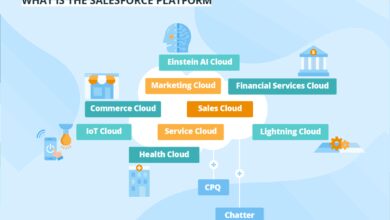
Choosing the right CRM can feel overwhelming, but with a solid CRM Buying Checklist, you’ll cut through the noise and find the perfect fit for your business needs—fast and confidently.
1. Define Your Business Goals and CRM Objectives

Before diving into software demos or pricing pages, it’s critical to understand why you need a CRM in the first place. A CRM Buying Checklist starts with clarity—knowing your goals ensures you don’t end up with a tool that’s either too basic or unnecessarily complex.




Identify Core Business Challenges
Every business faces unique hurdles. For sales teams, it might be lead tracking inefficiencies. For customer support, it could be scattered communication channels. Start by asking: What pain points are we trying to solve?
- Are sales reps missing follow-ups?
- Is customer data siloed across departments?
- Do marketing campaigns lack integration with sales data?
By listing these challenges, you create a foundation for evaluating CRM features that directly address them. For example, if lead leakage is a problem, prioritize CRMs with robust lead scoring and automation.
Align CRM Goals with Company Strategy
Your CRM shouldn’t operate in a vacuum. It must support broader business objectives like increasing customer retention, improving sales conversion rates, or scaling customer service. According to Gartner, organizations that align CRM strategy with overall business goals see up to 34% higher ROI from their CRM investments.
“A CRM is only as powerful as the strategy behind it. Technology enables, but vision directs.” — CRM Industry Analyst, Forrester Research
Ask stakeholders across departments what success looks like. Is it faster response times? Higher customer satisfaction scores? More closed deals per quarter? Document these KPIs—they’ll become evaluation criteria later in your CRM Buying Checklist.
2. Assess Team Size, Structure, and User Needs
The size and structure of your team dramatically influence which CRM will work best. A startup with five employees has different needs than an enterprise with 500. Your CRM Buying Checklist must account for user roles, access levels, and workflow complexity.
Determine User Roles and Access Requirements
Not everyone needs the same level of access. Sales managers may require full reporting dashboards, while customer service reps only need ticket management and contact history. Define user personas:
- Sales Representatives: Need quick access to leads, call logs, and deal stages.
- Marketing Teams: Require campaign tracking, email integration, and lead nurturing tools.
- Customer Support: Benefit from shared inboxes, knowledge bases, and SLA tracking.
- Executives: Focus on analytics, forecasting, and high-level performance metrics.
Choose a CRM that allows role-based permissions. This ensures data security and prevents information overload for users who don’t need every feature.
Consider Scalability for Future Growth
Today’s perfect CRM might become tomorrow’s bottleneck if it can’t scale. Ask: Will this system support twice as many users? Can it handle international teams or multi-language support?
For instance, Salesforce Sales Cloud offers tiered plans that grow with your business, while HubSpot scales seamlessly from small teams to large enterprises. Look for CRMs that offer modular pricing—pay only for what you need now, with room to expand.
“Scalability isn’t just about users—it’s about functionality. Can the CRM evolve as your business does?” — TechCrunch Enterprise Review
3. Evaluate Essential CRM Features and Functionality
This is where your CRM Buying Checklist gets technical. Not all CRMs offer the same features, and choosing one without the right capabilities can lead to costly workarounds or inefficiencies.
Contact and Lead Management Capabilities
The backbone of any CRM is its ability to store, organize, and track customer data. Look for systems that allow:
CRM Buying Checklist – CRM Buying Checklist menjadi aspek penting yang dibahas di sini.
- Customizable contact fields (e.g., industry, company size, source)
- Automated lead capture from web forms, emails, and social media
- Duplicate detection and data deduplication tools
- Lead scoring and segmentation based on behavior or demographics
For example, Zoho CRM offers AI-powered lead scoring that predicts which prospects are most likely to convert, helping sales teams prioritize outreach.
Sales Automation and Pipeline Tracking
A powerful CRM automates repetitive tasks so your team can focus on selling. Key automation features include:
- Auto-assignment of leads based on rules (e.g., territory, product interest)
- Follow-up reminders and task scheduling
- Email templates and sequences for consistent outreach
- Deal stage progression with visual pipeline views
Pipeline visibility is crucial. A drag-and-drop sales funnel lets managers spot bottlenecks—like deals stuck in “negotiation” for too long—and intervene early. Pipedrive excels here with its intuitive, visual sales pipeline.
Marketing and Customer Service Integration
Your CRM shouldn’t exist in isolation. It should integrate with marketing automation tools (like Mailchimp or ActiveCampaign) and customer service platforms (like Zendesk or Freshdesk).
Look for native integrations or API access that allows seamless data flow. For example, if a customer opens a support ticket, that interaction should automatically update their profile in the CRM, giving sales context for future conversations.
“Integration isn’t a luxury—it’s a necessity. Siloed data kills customer experience.” — Harvard Business Review
4. Analyze Integration and Compatibility Requirements
Even the most feature-rich CRM fails if it can’t talk to your existing tools. Your CRM Buying Checklist must include a thorough integration audit.
Check Compatibility with Existing Software Stack
List all current tools your business uses:
- Email platforms (Gmail, Outlook)
- Calendar apps (Google Calendar, Microsoft Outlook)
- Accounting software (QuickBooks, Xero)
- Marketing tools (HubSpot, Marketo)
- Telephony systems (RingCentral, Aircall)
Verify whether the CRM offers native integrations or requires third-party connectors like Zapier. Native integrations are more stable and easier to maintain. For example, Microsoft Dynamics 365 integrates seamlessly with Office 365, making it ideal for organizations already in the Microsoft ecosystem.
API Access and Custom Development Options
If your business has unique workflows or legacy systems, API access becomes essential. A robust API allows developers to build custom integrations, automate data syncs, or extend functionality.
Check if the CRM provides:
- Well-documented REST APIs
- Webhooks for real-time event triggers
- SDKs for mobile or desktop app development
- Support for OAuth 2.0 authentication
Platforms like Salesforce and HubSpot offer extensive APIs, enabling deep customization. However, custom development requires technical expertise and budget—factor this into your decision.
5. Prioritize Data Security, Privacy, and Compliance
In an era of data breaches and strict regulations, security can’t be an afterthought. Your CRM Buying Checklist must include a rigorous evaluation of how the platform protects sensitive customer information.
Understand Data Hosting and Encryption Standards
Where is your data stored? Is it encrypted at rest and in transit? Reputable CRMs use AES-256 encryption and TLS 1.2+ protocols to secure data.
CRM Buying Checklist – CRM Buying Checklist menjadi aspek penting yang dibahas di sini.
Also, consider geographic data residency. If you operate in the EU, ensure the CRM complies with GDPR and stores data within approved regions. Providers like SAP CRM and Oracle CX offer data center options in multiple regions to meet compliance needs.
Review Compliance Certifications
Look for industry-standard certifications such as:
- GDPR (General Data Protection Regulation)
- CCPA (California Consumer Privacy Act)
- ISO 27001 (Information Security Management)
- SOC 2 Type II (Security, Availability, Confidentiality)
These certifications indicate that the vendor undergoes regular audits and adheres to best practices. For example, Microsoft Dynamics 365 is compliant with over 100 regulatory standards, making it a top choice for regulated industries.
“Trust is earned through transparency. A CRM vendor should openly share its security practices.” — Cybersecurity Insider Report
6. Evaluate Pricing Models and Total Cost of Ownership
Price isn’t just about monthly fees. Your CRM Buying Checklist must account for the total cost of ownership (TCO), including hidden expenses like training, customization, and add-ons.
Compare Subscription Plans and Feature Tiers
Most CRMs offer tiered pricing based on features and user count. Common tiers include:
- Starter: Basic contact and deal management
- Professional: Automation, reporting, and integrations
- Enterprise: Advanced analytics, custom workflows, and API access
For example, HubSpot CRM starts free but charges for advanced features like sequences and reporting. Salesforce offers Essentials, Professional, and Enterprise editions, with prices scaling significantly at higher tiers.
Be wary of “feature locking.” Some vendors hide essential tools like phone integration or multi-channel support behind expensive add-ons.
Factor in Hidden Costs
The sticker price is just the beginning. Consider:
- Implementation fees (especially for enterprise CRMs)
- Training and onboarding costs
- Customization and development expenses
- Cost per additional feature (e.g., AI tools, telephony)
- Renewal and support fees
A study by Nucleus Research found that the average CRM implementation cost is 1.5x the annual license fee. Factor this into your budget to avoid surprises.
“The cheapest CRM isn’t always the most affordable in the long run.” — CFO Magazine
7. Test Drive Options with Trials and Demos
No CRM Buying Checklist is complete without hands-on testing. Demos and free trials reveal usability issues, workflow mismatches, and hidden complexities that specs alone can’t show.
Conduct Live Product Demos with Vendors
Schedule personalized demos with shortlisted vendors. Prepare a list of real-world scenarios to test:
- How easy is it to log a call or schedule a follow-up?
- Can you create a custom report in under 5 minutes?
- How does the system handle a lead handoff from marketing to sales?
Ask vendors to demonstrate their support process—how quickly do they respond to tickets? Do they offer onboarding specialists?
Run Internal User Testing with Free Trials
Most CRMs offer 14–30 day free trials. Use this time wisely:
CRM Buying Checklist – CRM Buying Checklist menjadi aspek penting yang dibahas di sini.
- Invite key users from sales, marketing, and support to test the system
- Import real (anonymized) data to simulate actual usage
- Test mobile app functionality and offline access
- Measure user adoption barriers—was navigation intuitive?
Tools like Agile CRM and Insightly offer full-featured free plans, allowing long-term evaluation without commitment.
What is a CRM Buying Checklist?
A CRM Buying Checklist is a structured guide that helps businesses evaluate, compare, and select the right Customer Relationship Management (CRM) software based on their specific needs, goals, team size, budget, and technical requirements.
Why is a CRM Buying Checklist important?
It prevents costly mistakes by ensuring you don’t overlook critical factors like integration, scalability, or data security. It aligns stakeholders, clarifies objectives, and streamlines the decision-making process.
How long should a CRM evaluation take?
Typically 4–8 weeks, depending on company size and complexity. This includes defining needs, shortlisting vendors, conducting demos, running trials, and finalizing contracts.
Can small businesses benefit from a CRM Buying Checklist?
Absolutely. Even small teams can waste time and money on the wrong CRM. A checklist ensures they get maximum value without overpaying for unused features.
What are the most common CRM selection mistakes?
Common mistakes include ignoring user adoption, underestimating integration needs, focusing only on price, and failing to involve end-users in the decision process.
Selecting the right CRM is a strategic move that impacts every customer-facing department. By following a comprehensive CRM Buying Checklist, you ensure alignment with business goals, user needs, and long-term growth. From defining objectives to testing real-world performance, each step reduces risk and increases ROI. Don’t rush the process—invest the time now to reap lasting benefits.
CRM Buying Checklist – CRM Buying Checklist menjadi aspek penting yang dibahas di sini.
Further Reading: