Small businesses today face fierce competition, but with the right tools, they can punch above their weight. Enter AI-powered Sales CRM software for small business—a smart, scalable solution that transforms how teams manage leads, close deals, and retain customers. Let’s dive into why this tech is a total game-changer.
What Is AI-powered Sales CRM Software for Small Business?

At its core, an AI-powered Sales CRM software for small business combines customer relationship management (CRM) functionality with artificial intelligence to automate, predict, and optimize sales processes. Unlike traditional CRMs that merely store contact data, AI-enhanced systems actively analyze behavior, forecast outcomes, and recommend next steps—making them indispensable for lean teams.

How AI Enhances Traditional CRM Features
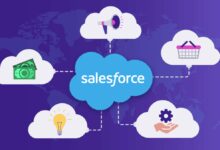
Traditional CRM platforms like Salesforce or HubSpot have long helped businesses organize customer data. However, they often require manual input and interpretation. AI supercharges these systems by introducing automation and intelligence.
- Predictive lead scoring: AI analyzes historical data to rank leads based on their likelihood to convert.
- Automated data entry: Natural language processing (NLP) pulls key details from emails and calls into the CRM automatically.
- Behavioral insights: Machine learning identifies patterns in customer interactions to suggest optimal follow-up times.
For example, Salesforce Einstein AI uses predictive analytics to recommend the best leads to contact next, increasing sales efficiency by up to 30%.
Why Small Businesses Need AI in CRM
Small businesses typically operate with limited staff and resources. Hiring a full sales analytics team isn’t feasible. AI fills that gap by acting as a virtual sales analyst.
- Reduces time spent on repetitive tasks like logging calls or updating records.
- Improves decision-making with real-time insights.
- Levels the playing field against larger competitors with bigger budgets.
“AI doesn’t replace salespeople—it empowers them to focus on what they do best: building relationships.” — Forbes Insights, 2023
Top 7 Benefits of AI-powered Sales CRM Software for Small Business
Adopting AI-powered Sales CRM software for small business isn’t just a trend—it’s a strategic move. Here are seven compelling advantages that directly impact growth, efficiency, and customer satisfaction.
1. Smarter Lead Prioritization with Predictive Analytics
One of the biggest challenges for small sales teams is knowing where to focus. AI-powered Sales CRM software for small business uses predictive analytics to score leads based on engagement history, demographics, and behavioral signals.
- Identifies high-intent leads from website visits, email opens, and content downloads.
- Reduces wasted effort on low-probability prospects.
- Integrates with marketing tools like Mailchimp or ActiveCampaign to track multi-channel behavior.
According to a McKinsey report, companies using AI for lead scoring see a 50% increase in qualified leads and a 30–50% reduction in cost per lead.
2. Automated Data Entry and Activity Logging
Sales reps spend nearly one-third of their time on administrative tasks. AI eliminates much of this burden by automatically capturing and logging activities.
- Syncs with email and calendar to log meetings and correspondence.
- Uses voice recognition to transcribe calls and extract action items.
- Updates deal stages based on communication patterns.
Tools like Gong and Chorus.ai integrate with CRMs to record and analyze sales calls, providing real-time coaching and data enrichment.
3. Personalized Customer Engagement at Scale
Personalization drives conversion. AI-powered Sales CRM software for small business enables hyper-personalized outreach without requiring manual effort for each contact.
- Generates tailored email content using AI copywriting (e.g., HubSpot’s Content Assistant).
- Suggests optimal send times based on recipient behavior.
- Recommends products or services based on past purchases or browsing history.
A study by Boston Consulting Group found that personalized outreach increases sales conversion rates by 10–30%.
4. Accurate Sales Forecasting and Revenue Predictions
For small businesses, cash flow predictability is critical. AI-powered Sales CRM software for small business improves forecasting accuracy by analyzing historical deal data, win rates, and pipeline health.
- Identifies stalled deals and suggests interventions.
- Forecasts monthly or quarterly revenue with 80–90% accuracy.
- Flags anomalies, such as sudden drop-offs in engagement.
Platforms like Zoho CRM with Zia AI offer forecasting dashboards that update in real time, helping owners make informed decisions about hiring, inventory, or marketing spend.
5. Enhanced Customer Retention and Upselling
Acquiring a new customer costs five times more than retaining an existing one. AI helps small businesses strengthen relationships and identify upsell opportunities.
- Monitors customer satisfaction through sentiment analysis of support tickets and emails.
- Recommends cross-sell products based on usage patterns.
- Sends automated renewal reminders and loyalty offers.
For instance, AI can detect frustration in a customer’s email tone and alert a manager to intervene before churn occurs.
6. Intelligent Sales Coaching and Performance Insights
Small teams can’t afford poor performance. AI provides real-time feedback and coaching to help reps improve.
- Analyzes call transcripts to identify missed objections or weak closing techniques.
- Tracks KPIs like response time, follow-up frequency, and deal velocity.
- Offers personalized training modules based on individual weaknesses.
Revenue.io and Gong use AI to score sales calls and provide actionable insights, helping reps close more deals with confidence.
7. Seamless Integration with Marketing and Support Tools
AI-powered Sales CRM software for small business doesn’t work in isolation. It integrates with email, social media, marketing automation, and customer support platforms to create a unified view of the customer journey.
- Syncs with Facebook Ads or Google Ads to track lead sources.
- Connects with helpdesk software like Zendesk to surface support history during sales calls.
- Automates workflows using tools like Zapier or Make (formerly Integromat).
This holistic integration ensures that every team member has the context they need to deliver exceptional service.
How to Choose the Right AI-powered Sales CRM Software for Small Business
With so many options available, selecting the best AI-powered Sales CRM software for small business can be overwhelming. The key is to align the tool with your business goals, team size, and budget.
Key Features to Look For
Not all AI CRMs are created equal. Focus on platforms that offer the following essential capabilities:
- Lead scoring and segmentation: Automatically ranks and groups leads based on behavior.
- AI-driven insights: Provides recommendations, not just data dashboards.
- Mobile accessibility: Allows reps to update records and access insights on the go.
- Customizable automation: Lets you set triggers and actions without coding.
- Natural language search: Enables querying the CRM like a chatbot (e.g., “Show me all leads from California who opened my email”).
Look for vendors that offer free trials or demos to test usability before committing.
Budget Considerations and Pricing Models
Small businesses must balance functionality with affordability. Most AI-powered Sales CRM software for small business uses a subscription model, typically priced per user per month.
- Entry-level: $10–$25/user/month (e.g., Zoho CRM, Insightly).
- Mid-tier: $25–$50/user/month (e.g., HubSpot Sales Hub, Freshsales).
- Premium: $50+/user/month (e.g., Salesforce Sales Cloud, Pipedrive with AI add-ons).
Some platforms offer AI features as add-ons, so be sure to check what’s included in the base plan. For example, HubSpot’s AI tools require a Professional or Enterprise tier.
AI-powered Sales CRM software for small business – AI-powered Sales CRM software for small business menjadi aspek penting yang dibahas di sini.
Scalability and Future-Proofing
Choose a CRM that can grow with your business. Ask the following questions:
- Can the system handle 2x or 5x the number of contacts and deals?
- Does it support multi-channel sales (e.g., e-commerce, phone, in-person)?
- Is there a robust API for custom integrations?
- How frequently does the vendor release AI updates?
A future-proof AI-powered Sales CRM software for small business should evolve with emerging technologies like voice assistants, chatbots, and predictive AI.
Top 5 AI-powered Sales CRM Software for Small Business in 2024
To help you get started, here are five of the best AI-powered Sales CRM software for small business options available today—each offering a unique blend of AI features, ease of use, and value.
1. HubSpot Sales Hub (with AI Features)
HubSpot is a favorite among small businesses for its intuitive interface and powerful AI tools.
- AI-powered email writing and meeting summaries.
- Predictive lead scoring and deal insights.
- Free tier available with basic CRM functionality.
Its AI assistant helps reps draft personalized emails in seconds. Learn more at hubspot.com.
2. Zoho CRM with Zia AI
Zoho CRM offers one of the most comprehensive AI suites at an affordable price.
- Zia AI provides voice commands, sentiment analysis, and sales forecasting.
- Automated data capture from emails and calls.
- Highly customizable workflows and AI rules.
It’s ideal for businesses that want deep AI integration without a high price tag. Visit zoho.com/crm for a free trial.
3. Salesforce Sales Cloud with Einstein AI
Salesforce remains the gold standard for CRM, and its Einstein AI adds serious intelligence.
- Predictive lead and opportunity scoring.
- AI-driven next-best-action recommendations.
- Advanced analytics and dashboarding.
Best suited for small businesses planning rapid growth. Explore at salesforce.com.
4. Freshsales (by Freshworks) with Freddy AI
Freshsales combines a modern UI with Freddy AI to deliver smart sales automation.
- AI-based lead scoring and routing.
- Conversation intelligence for call analysis.
- Integrated phone, email, and chat in one platform.
Freddy AI learns from your team’s behavior to improve suggestions over time. Check it out at freshworks.com.
5. Pipedrive with AI Sales Assistant
Pipedrive is built for sales-focused teams and now includes AI enhancements.
- AI-powered activity suggestions and deal insights.
- Automated data entry from emails.
- Visual sales pipeline management.
Its AI assistant helps prioritize daily tasks, making it perfect for solo entrepreneurs or small teams. Learn more at pipedrive.com.
Common Challenges and How to Overcome Them
While AI-powered Sales CRM software for small business offers immense benefits, adoption isn’t always smooth. Here are common hurdles and how to address them.
Data Quality and Integration Issues
AI is only as good as the data it receives. Incomplete or inaccurate data leads to flawed insights.
- Solution: Clean your existing database before migration.
- Use data validation rules within the CRM.
- Integrate with tools that auto-enrich contacts (e.g., Clearbit or Hunter.io).
Regular audits ensure data integrity over time.
User Adoption and Training
Employees may resist new technology, especially if it seems complex.
- Solution: Start with a pilot team and gather feedback.
- Provide hands-on training and video tutorials.
- Highlight quick wins, like time saved on data entry.
According to Capterra, 68% of CRM projects fail due to poor user adoption—so training is critical.
Cost vs. ROI Concerns
Small businesses worry about ROI when investing in AI tools.
- Solution: Start with a low-cost plan and measure KPIs like conversion rate, deal cycle length, and rep productivity.
- Calculate time saved and revenue gained from better lead conversion.
- Scale up only after proving value.
Most AI CRMs offer ROI calculators to estimate potential gains.
Future Trends in AI-powered Sales CRM Software for Small Business
The AI landscape is evolving rapidly. Staying ahead means understanding where AI-powered Sales CRM software for small business is headed.
Hyper-Personalization Through Generative AI
Generative AI (like GPT-4) is enabling CRMs to create fully personalized content—emails, proposals, even video messages—on demand.
- AI will draft outreach based on a lead’s LinkedIn profile or recent blog comments.
- Voice cloning could allow personalized voice messages from CEOs.
- Dynamic pricing suggestions based on customer budget signals.
This level of personalization will become standard within 2–3 years.
Proactive AI Assistants
Future AI won’t just react—it will anticipate. Imagine an AI that:
- Schedules follow-ups before a rep remembers.
- Notifies you when a key decision-maker changes jobs.
- Recommends renegotiating a contract before renewal.
These proactive assistants will act as true sales partners.
AI-powered Sales CRM software for small business – AI-powered Sales CRM software for small business menjadi aspek penting yang dibahas di sini.
AI Ethics and Data Privacy
As AI collects more data, ethical concerns grow. Small businesses must ensure compliance with regulations like GDPR and CCPA.
- Choose CRMs with transparent data policies.
- Enable opt-in consent for AI-driven communications.
- Audit AI decisions to avoid bias in lead scoring.
Trust will be a key differentiator in AI adoption.
Implementing AI-powered Sales CRM Software for Small Business: A Step-by-Step Guide
Rolling out a new CRM doesn’t have to be chaotic. Follow this proven process to ensure success.
Step 1: Define Your Sales Process
Map out your current sales stages—from lead capture to closing and onboarding. This helps configure the CRM to match your workflow.
- Identify key touchpoints (e.g., first call, demo, proposal).
- Determine what data you need at each stage.
- Define success metrics (conversion rate, average deal size).
This clarity ensures the AI can provide relevant insights.
Step 2: Choose and Customize Your CRM
Select a platform that fits your needs and customize fields, pipelines, and automation rules.
- Add custom deal stages and contact properties.
- Set up AI-powered lead scoring criteria.
- Integrate with email, calendar, and phone systems.
Use templates to speed up setup.
Step 3: Migrate and Clean Data
Import existing contacts and deals, but clean duplicates and outdated entries first.
- Use CSV import tools with validation.
- Enrich data with AI-powered tools like Clearbit.
- Test a small batch before full migration.
Accurate data is the foundation of AI success.
Step 4: Train Your Team
Conduct hands-on training sessions and create quick-reference guides.
- Focus on daily use cases: logging calls, updating deals, using AI suggestions.
- Assign a CRM champion to answer questions.
- Encourage feedback to improve adoption.
Reinforce training with weekly check-ins.
Step 5: Monitor, Optimize, and Scale
Track KPIs and refine your setup over time.
- Review AI-generated insights weekly.
- Adjust lead scoring models based on actual conversions.
- Add new integrations as your business grows.
Continuous optimization ensures long-term ROI.
What is AI-powered Sales CRM software for small business?
It’s a customer relationship management system enhanced with artificial intelligence to automate sales tasks, predict outcomes, and provide intelligent insights. It helps small businesses manage leads, close deals faster, and improve customer retention with minimal manual effort.
How does AI improve lead conversion in small businesses?
AI improves lead conversion by scoring and prioritizing high-intent prospects, automating follow-ups, personalizing outreach, and identifying the best times to contact leads—resulting in higher engagement and faster deal closure.
Is AI CRM software expensive for small businesses?
Not necessarily. Many AI-powered Sales CRM software for small business options offer affordable plans starting at $10–$25 per user per month. Some, like HubSpot, even provide free tiers with basic AI features, making it accessible for startups and solopreneurs.
Can AI replace salespeople in a small business?
No, AI doesn’t replace salespeople—it enhances their performance. AI handles repetitive tasks and provides insights, allowing sales reps to focus on building relationships, negotiating, and closing deals more effectively.
What are the risks of using AI in CRM?
Risks include poor data quality leading to inaccurate predictions, over-reliance on automation, and privacy concerns. These can be mitigated by maintaining clean data, balancing AI with human judgment, and choosing compliant, transparent platforms.
AI-powered Sales CRM software for small business is no longer a luxury—it’s a necessity for staying competitive. From automating mundane tasks to delivering deep customer insights, AI empowers small teams to achieve more with less. By choosing the right platform, implementing it strategically, and embracing future trends, small businesses can unlock unprecedented growth and efficiency. The future of sales is intelligent, and it’s already here.
AI-powered Sales CRM software for small business – AI-powered Sales CRM software for small business menjadi aspek penting yang dibahas di sini.
Recommended for you 👇
Further Reading:
